


Understanding Dog Aggression: Types, Causes, and Effective Solutions for Lasting Change

Dog aggression can be a serious concern for pet owners. It can lead to fear, anxiety, and dangerous situations for both the animal and the people around it. By understanding the nature of aggression in dogs, owners can address these issues more effectively. In this post, we will explore the various types of aggression, the underlying causes, how to spot these behaviors, and practical steps to improve the situation.
What is Dog Aggression?
Dog aggression encompasses various behaviors like growling, barking, lunging, or biting. While aggression is a natural instinct for dogs, often motivated by fear, the need to protect their territory, or resource guarding, it becomes a problem when it endangers others. For example, statistics show that around 4.5 million people in the U.S. are bitten by dogs each year, highlighting the importance of managing aggression.

Types of Dog Aggression
Identifying the different types of aggression is crucial for effective treatment. Here are the most common forms:
1. Fear Aggression
Fear aggression happens when a dog feels threatened and reacts defensively. This behavior is common in dogs from shelters or those with negative past experiences. For instance, a dog that was previously abused may growl or bite when approached suddenly.
2. Territorial Aggression
Territorial aggression occurs when a dog perceives a threat to its home or space. This might involve barking or charging at strangers or other dogs that come near the property. For example, a study found that 68% of dog bites occur when a dog is protecting its yard.
3. Protective Aggression
Many dogs display protective aggression when they feel the need to defend their owners or other animals. Breeds like German Shepherds and Rottweilers are particularly prone to this behavior, often reacting aggressively to perceived threats.
4. Redirected Aggression
Redirected aggression happens when a dog cannot reach the source of its frustration, causing it to target another animal or person nearby. For example, if a dog is on a leash and sees another dog, it may lash out at its owner instead.
5. Play Aggression
Young dogs often show play aggression, which can look like roughhousing that might escalate. While it's usually harmless, it can concern owners when it becomes too intense. For instance, a puppy may nip during playtime, which could be misidentified as aggression.
Recognizing Dog Aggression
Knowing the signs of aggression is vital for preventing escalation. Watch for:
Body Language: A stiff posture, raised hackles, and a lowered head can indicate aggression. Look for signs like avoiding eye contact or turning away.
Vocalizations: Barking, growling, or whining can signal discomfort. These sounds should not be ignored as they often precede aggressive actions.
Facial Expressions: A dog showing its teeth, narrowing its eyes, or having a tense jaw may be displaying aggression.
Physical Actions: Lunging, snapping, or biting should be taken seriously and addressed immediately.
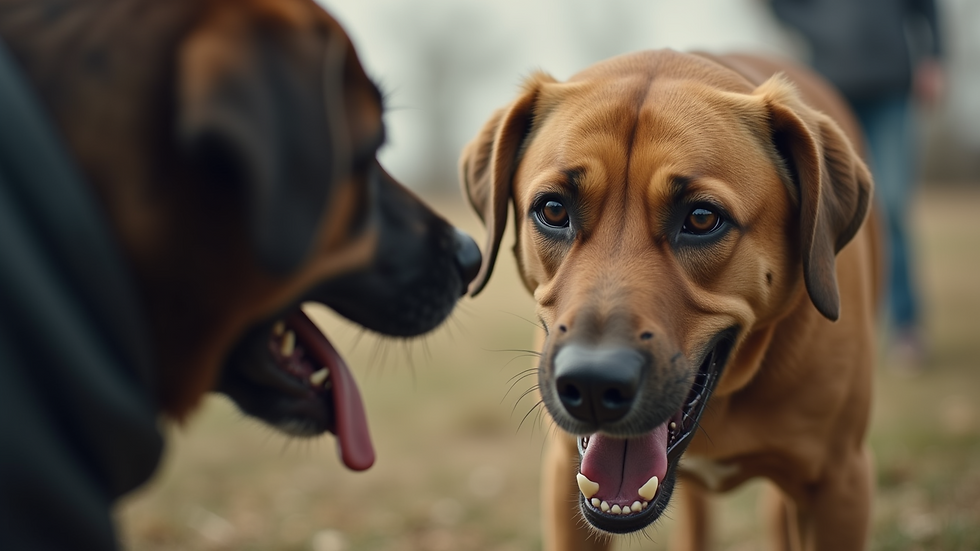
An eye-level view of a dog trainer working with an aggressive dog
Causes of Dog Aggression
Understanding the reasons behind aggressive behavior can help in finding solutions. Common causes include:
Lack of Socialization: Dogs that haven’t been properly socialized may react aggressively to unfamiliar situations or people. About 35% of aggressive behaviors can be traced back to insufficient exposure during critical developmental stages.
Fear or Anxiety: Fearful or anxious dogs might become aggressive to protect themselves. An estimated 30% of dogs experience anxiety during loud noises or unfamiliar circumstances.
Medical Issues: Illness or pain can cause unexpected aggression. Always consult a veterinarian if you suspect that your dog’s behavior change is due to health issues.
Genetics: Some breeds are inherently more predisposed to aggressive behavior. For example, studies show that certain breeds like Pit Bulls or Doberman Pinschers may exhibit more aggressive tendencies if not trained correctly.
Techniques to Address Dog Aggression
Managing dog aggression requires time and the right approaches. Here are effective strategies:
1. Professional Training
A professional dog trainer or behaviorist can offer tailored strategies for your dog's needs. Seek trainers specializing in positive reinforcement. This method focuses on rewarding good behavior, making it effective in reducing aggressive tendencies.
2. Socialization
Start by gradually exposing your dog to new experiences, people, and other animals. For example, consider visiting dog parks during off-peak hours to allow for controlled interactions. A study found that dogs exposed to diverse environments early show significantly better social skills.
3. Desensitization and Counter-Conditioning
This approach involves exposing your dog to what triggers its aggression while rewarding calm behavior. For example, if your dog barks at other dogs, give treats when it remains calm during those encounters.
4. Management Techniques
You might need to use tools like muzzles or leashes temporarily. Safely utilized, these can help manage aggressive behavior while you work on training.
5. Consistent Routine
Establishing a reliable daily routine can help reduce anxiety in dogs. Regular exercise, training, and socializing contribute to a balanced, less aggressive dog. Studies show dogs that engage in physical activity are 75% less likely to exhibit aggressive behaviors.
Realistic Timeline for Improvement
Addressing dog aggression takes time and persistence. Here's a typical timeline for improvement:
Immediate Changes (1-2 weeks): You might see some initial differences as your dog starts to respond to new training techniques and management methods.
Short-Term Improvements (1-3 months): Expect more significant changes as consistent training and socialization take effect. Owners often report much more responsive behavior at this stage.
Long-Term Results (3-6 months and beyond): Ongoing efforts and reinforcement of positive behaviors can lead to meaningful, lasting reductions in aggression.

Well-trained and socialized German Shepherd holding a down and stay command while not displaying any aggression or prey drive.
Moving Forward with Confidence
Understanding dog aggression is key to managing it effectively. By identifying its types, underlying causes, and practical intervention strategies, you can help your dog become more balanced and calm. Remember, patience and consistency are essential. With dedication, you can create a safer environment for both your dog and those around them.
#dogtraining #dogtrainer #puppytraining #obediencetraining #trainyourdog #dogbehavior #dogtrainingtips #CovingtonGA #CovingtonDogTrainer #GeorgiaDogTrainer #NewtonCountyGA #dogtrainingisfun #puppytrainingtips #IronWillDogTraining #IWDT